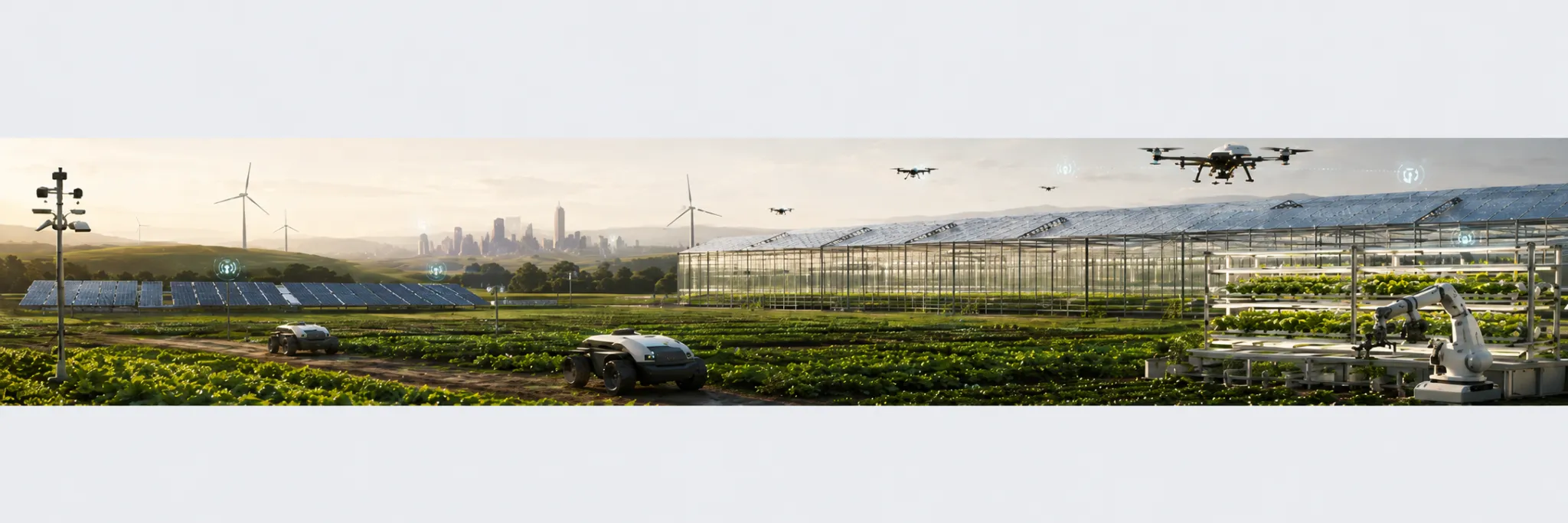

About the Department
Yapılış Tarihi | 03 July 2025, Thursday

Located within the Faculty of Science and Letters of Burdur Mehmet Akif Ersoy University, the Department of Precision Agriculture and Agricultural Robots was established in 2025 with the aim of training qualified human resources that will guide the digital transformation of agricultural production.
Opened by the decision of the Higher Education Council Executive Board dated May 27, 2025, the Department of Precision Agriculture and Agricultural Robots includes;
-Plant Production Systems in Precision Agriculture,
-Animal Production Systems in Precision Agriculture and
-Robotic and Autonomous Systems in Precision Agriculture Main Science Branches.
This academic structure offers a holistic approach to the future of agriculture by bringing together plant production, animal production, agricultural technologies, robotics, and autonomous systems under a common education and research axis.
The department has started its undergraduate education by accepting its first students in the 2025–2026 Academic Year.
Our department from the perspective of our students
World agriculture is undergoing a significant transformation process due to increasing population and food demand, climate change, decreasing water resources and agricultural production areas, rising production costs, and difficulties in accessing qualified labor in rural areas. These conditions necessitate not only producing more in agricultural production but also the development of production systems that use resources more efficiently, are measurable, sustainable, and technology-based.
One of the key components of this transformation, precision agriculture, is a data and technology-based management approach aimed at implementing agricultural practices in the right place, at the right time, in the right amount, and with the right method.
Today, this approach is evolving towards a digital-smart agriculture understanding referred to as Agriculture 5.0, integrating artificial intelligence, robotics, the Internet of Things (IoT), big data, remote sensing, autonomous systems, and cloud computing technologies. Agriculture 5.0 addresses not only automation but also human-machine collaboration, high productivity, and social, economic, and environmental sustainability.
The Department of Precision Agriculture and Agricultural Robots aims to equip its students with the knowledge, skills, and competencies to be at the center of this transformation.
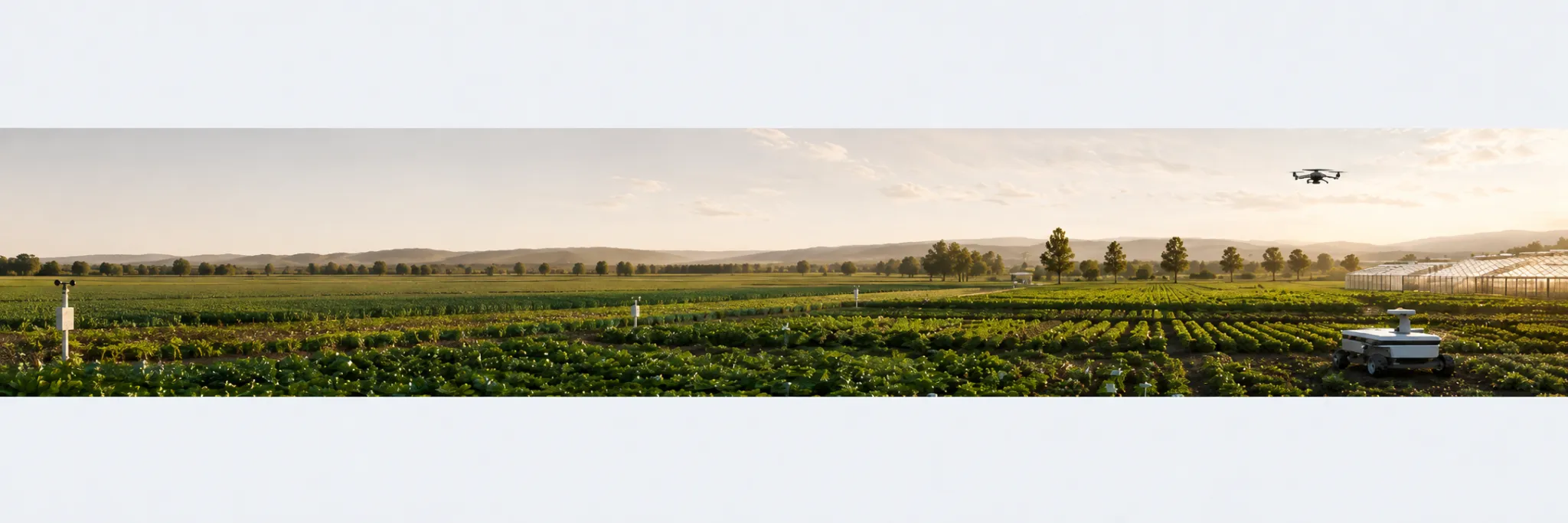
The educational approach of our department is based on an interdisciplinary structure that integrates agricultural sciences with engineering and digital technologies. It aims for students not only to be able to use existing agricultural technologies but also to identify agricultural problems, obtain and analyze necessary data, and develop appropriate technological solutions for these problems.
The core competency areas highlighted in the educational program are as follows:
- - Precision agriculture and variable rate application technologies
- - Agricultural mechanization, robotics, and autonomous systems
- - GNSS, positioning, and autonomous navigation technologies
- - Geographic Information Systems (GIS) and remote sensing
- - Unmanned aerial vehicles and imaging systems
- - Sensors, Internet of Things (IoT), and smart measurement systems
- - Artificial intelligence, machine learning, and image processing
- - Agricultural data analytics and decision support systems
- - Smart irrigation and resource management
- - Digital twin, automation, and advanced agricultural technologies
- - Smart technology applications in plant and animal production
- - Sustainable and resource-efficient agricultural production
In the smart agriculture approach, sensors, IoT infrastructure, artificial intelligence, drones, big data, and cloud technologies work together to enable real-time monitoring, analysis, and management of agricultural production processes.
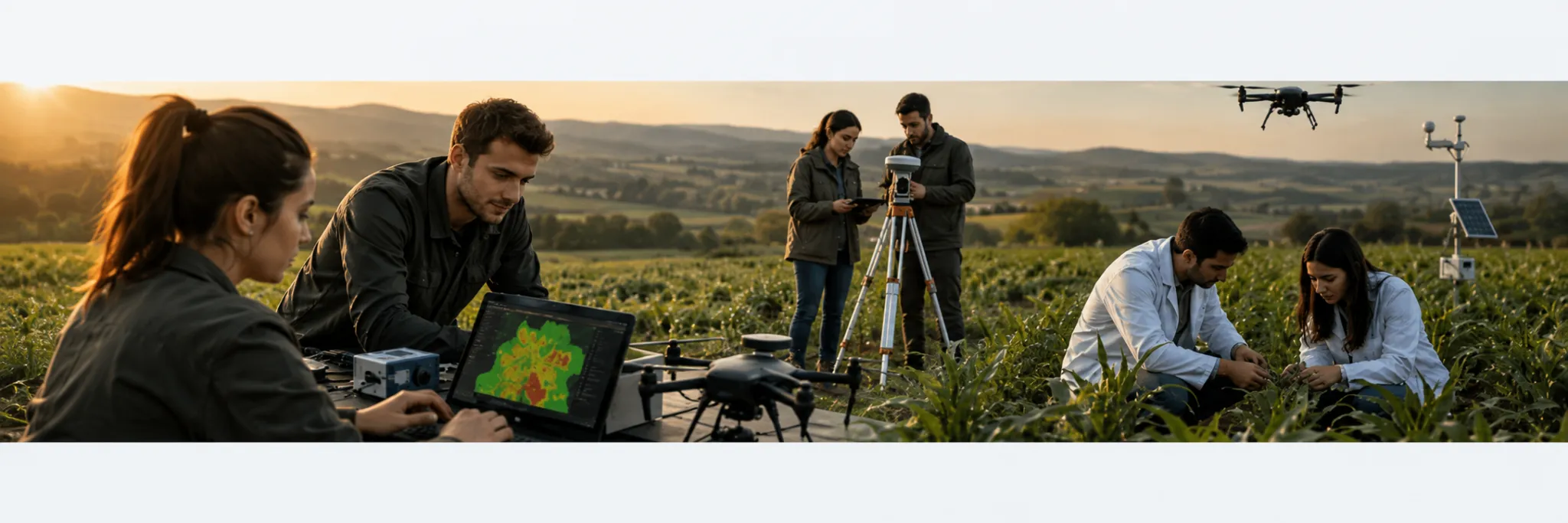
Education in the Department of Precision Agriculture and Agricultural Robots is based on the integration of theoretical knowledge with application and technology development skills. In this direction, it is aimed for students to take an active role in measurement, data collection, analysis, modeling, design, programming, prototyping, and system integration processes.
The collection of soil, plant, animal, climate, and machine data obtained from agricultural production systems through sensors and digital platforms; the evaluation of this data using artificial intelligence and data analytics methods; and the transfer of the results to autonomous systems or decision support systems are among the fundamental components of the department's education and research approach.
In this context, agricultural robots, autonomous vehicles, smart agricultural machines, sensor-based monitoring systems, artificial intelligence-supported early warning and detection systems, image processing applications, remote sensing, smart irrigation, and digital twin technologies constitute the main fields of education and research of the department.
The digital twin approach allows for the real-time monitoring of a physical agricultural system, the analysis of the obtained data, the evaluation of different scenarios in a virtual environment, and the development of data-driven decisions.
With this educational approach, it is aimed for students to be not only users of technology but also individuals who can develop innovative technologies and systems for agricultural problems.
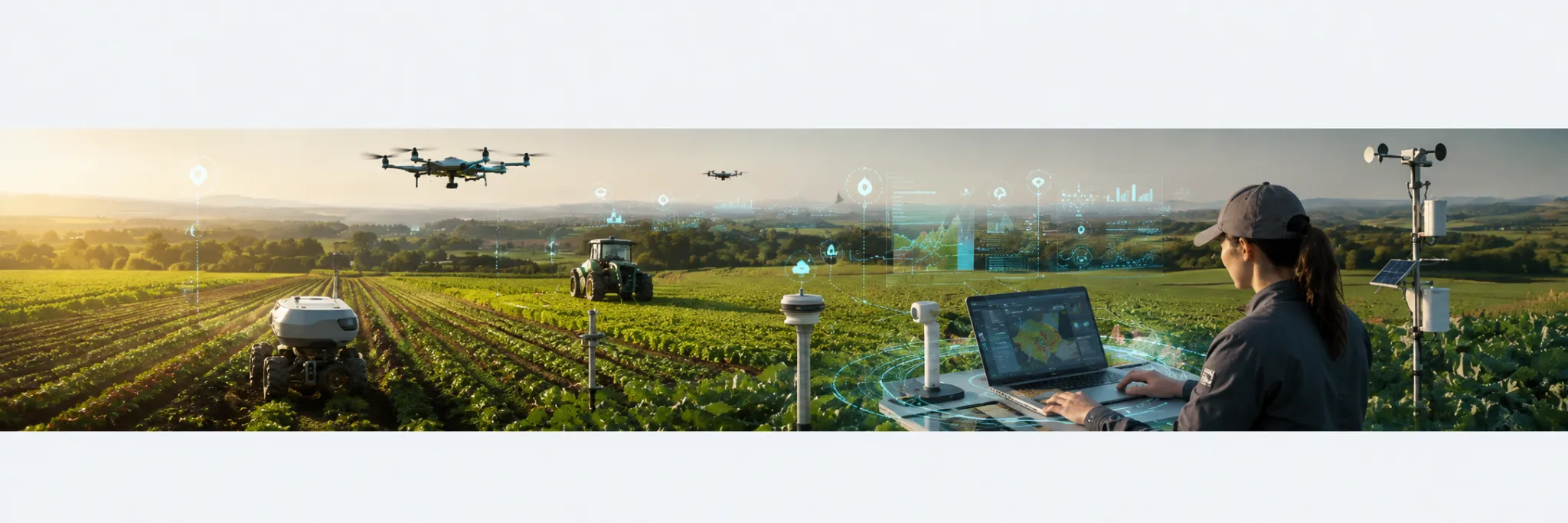
The future of agriculture is progressing towards a new era where autonomous systems, artificial intelligence, robots, sensor networks, and data-driven decision mechanisms have become an integral part of production processes, going beyond mechanization. Smart irrigation, artificial intelligence-supported production systems, renewable energy integration, and advanced automation applications are expected to become increasingly decisive in agricultural production in the coming years.
Our department aims to train its students not only to use today's technologies but also to possess scientific and technological competencies that will enable them to adapt to future agricultural technologies and contribute to the development of these technologies.
It is aimed for our graduates to have interdisciplinary competencies that will allow them to take roles in areas such as precision and smart agricultural technologies, agricultural automation, robotic systems, agricultural data analytics, remote sensing and GIS, sensor technologies, UAV applications, R&D, technology development, and agricultural technology entrepreneurship.